Your Year-End Financial Planning Checklist for 2026
October Wrap-Up: Planning Ahead for a Stronger 2026
As Financial Planning Awareness Month comes to a close, it’s the perfect time to take action before the year ends.
October has been about understanding your income, risks, healthcare costs, and protection strategies — now it’s time to put it all into motion.
With just a few months left in 2025, you still have time to make strategic moves that can strengthen your finances for the year ahead.
Here’s your year-end financial planning checklist to help you prepare confidently for 2026.
1. Review Your Income Plan
Start by reviewing where your income will come from in the new year:
- Social Security
- Pensions
- Annuities
- Investment withdrawals
Ask yourself: Will these income sources cover your expenses, especially with inflation and rising healthcare costs?
If not, explore ways to create guaranteed income for essentials through fixed or fixed indexed annuities. They can help turn savings into predictable, lifelong income—protecting you from market risk and uncertainty.
2. Revisit Your Tax Strategy
Year-end is your last chance to make smart tax moves that can lower your 2025 bill and set you up for 2026.
Consider these steps:
- Perform Roth conversions before December 31.
- Make Qualified Charitable Distributions (QCDs) if you’re 70½ or older.
- Harvest investment losses to offset gains.
- Review your withholding and estimated tax payments to avoid surprises in April.
Tip: A small shift in how and when you draw income can make a big difference in your lifetime tax liability.
3. Check Your Medicare and Health Coverage
Medicare Open Enrollment is underway through December 7, 2025.
Review your coverage, confirm prescriptions, and ensure your preferred doctors are still in-network.
If you’re not yet eligible for Medicare, review your private health insurance, dental, and vision plans. Make sure your deductibles and out-of-pocket costs align with your budget.
Why it matters: Healthcare inflation continues to rise faster than general inflation, and early adjustments prevent costly surprises later.
4. Evaluate Investment Risk and Rebalance
Market volatility in 2025 may have shifted your investment mix.
Rebalancing before year-end helps realign your portfolio with your goals and risk tolerance.
Checklist:
- Review your 401(k), IRA, and brokerage allocations.
- Rebalance to your target mix if one asset class has grown too large.
- Shift a portion of volatile assets into stable income sources if retirement is near.
Remember: protection and growth can coexist — and your portfolio should reflect both.
5. Protect Against Inflation and Rising Costs
Inflation may be cooling but remains higher than pre-pandemic levels. A few strategies can help preserve your purchasing power:
- Include annuities with inflation-adjusted income in your plan.
- Reassess your cash flow and discretionary spending.
- Review your insurance coverage to ensure it still fits your income and needs.
Even small adjustments—like locking in fixed rates on annuities or certificates of deposit—can shield your retirement dollars from erosion.
6. Update Your Estate Plan and Beneficiaries
Life changes—your estate plan should, too. Before the year ends, make sure:
- Beneficiaries on retirement accounts and insurance policies are up to date.
- Your will, trust, or power of attorney reflects your current wishes.
- You’ve shared your intentions with loved ones and your advisor.
Keeping documents current prevents confusion and ensures your assets are distributed as intended.
7. Schedule Your Annual Financial Review
The most important step you can take this fall is scheduling a comprehensive financial review before year-end.
During this meeting, your advisor can help you:
- Review 2025 progress and identify gaps for 2026.
- Optimize income and taxes under new thresholds.
- Align your investment, insurance, and healthcare strategies.
A proactive review now helps you start 2026 strong—and confident.
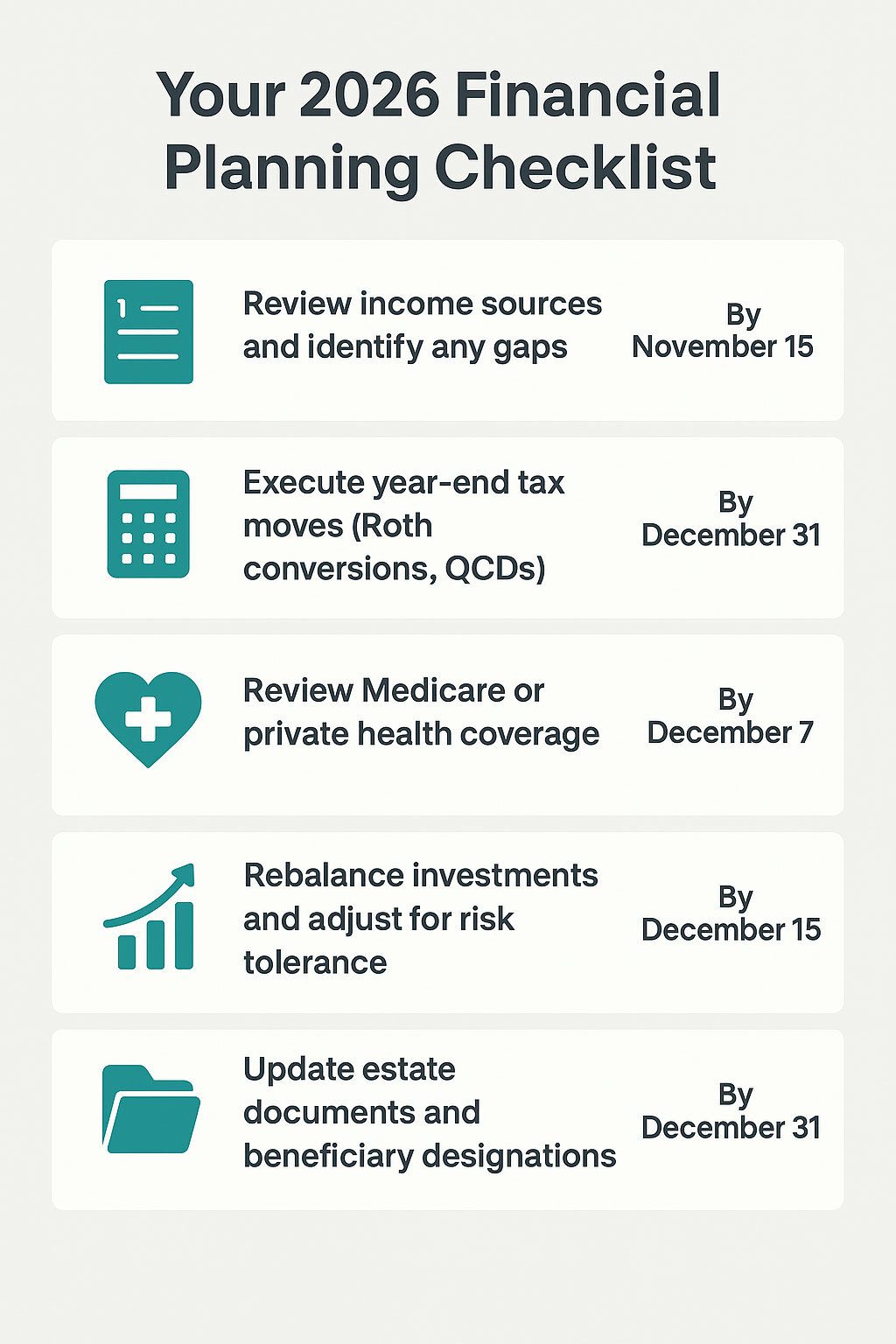
Year-End Financial Planning Checklist
| Step | Action | Deadline |
|---|---|---|
| 1 | Review income sources and identify any gaps | By November 15 |
| 2 | Execute year-end tax moves (Roth conversions, QCDs) | By December 31 |
| 3 | Review Medicare or private health coverage | By December 7 |
| 4 | Rebalance investments and adjust for risk tolerance | By December 15 |
| 5 | Update estate documents and beneficiary designations | By December 31 |
Final Thoughts
As October ends, use what you’ve learned this month to finish strong.
Financial planning isn’t just a once-a-year task — it’s an evolving process that keeps you in control of your future.
By tackling this checklist now, you’ll step into 2026 with greater clarity, protection, and confidence — knowing you’ve covered every detail that matters most.
Written by Brent Meyer, founder of SafeMoney.com. With more than 20 years of experience helping families navigate retirement and legacy planning, Brent is committed to making financial education simple, clear, and trustworthy.
Disclaimer
This article is for educational and informational purposes only. It does not constitute financial, legal, or tax advice. Consult a licensed professional about your specific situation. SafeMoney.com is not affiliated with or endorsed by any government agency.
The post Your Year-End Financial Planning Checklist for 2026 first appeared on SafeMoney.com.
Featured Blogs
- Estate Planning: More Than Just a Simple Will
- Safe Money vs Market Risk: Why Retirees Choose Protection
- Avoid Early Failures in Retirement Planning
- How Much Income Can $1 Million Really Generate?
- Can You Retire at 60 with $1 Million?
- Your Guide to Long-Term Care Planning
- Harnessing the Luck of the Irish for Your Retirement 🐾
- Honoring Women Advisors for National Women's Month
- Retiring During a Bear Market: What to Know
- The Biggest Retirement Tax Mistakes to Avoid
- Roth Conversions Before RMDs: Smart Tax Strategy?
- Mastering Roth IRA Conversions for Retirement Success
- Are You Paying Retirement Taxes You Don’t Have To?
- Annuities and the Peak65 Explosion
- Financial Trends of 2026: Advisors Play Critical Role
- Inflation Is Fueling Retirement Fears in 2026
- Social Security Survivor Benefits Explained for Couples
- Don't Let Unexpected Retirement Expenses Catch You Off Guard
- Annuities: Embracing the 'Safe Growth' Trend
- Will Social Security Run Out? 2026 Update
- Life Insurance: The Income Bridge Many Couples Miss
- What Happens to Your Income When One of You Is Gone?
- A Paws-On Approach to Understanding Medicare Basics 🐾
- Love Isn’t Just a Feeling—It’s a Retirement Plan
- Understanding Fixed Index Annuities in Today's Market
- Secure Retirement Plans: Annuities & Longevity Strategies
- New Tools, Same Goals: How Retirement Planning Is Evolving 🐾
- Why Market Volatility Hits Retirees Harder Than Workers
- Annuities: Your Forever Treat Bowl in Retirement 🐾
- The Retirement Paycheck: How to Replace Your Salary in Retirement
- Secure Your Retirement with Safe Income Strategies
- 3 Biggest Retirement Income Mistakes After 50
- Why Retirement Income Matters More Than Account Savings
- What Financial Awareness Really Means in Retirement
- Having Savings Isn’t the Same as Having a Plan
- The Secret to Retirement Confidence Is Structure, Not Luck
- What Retirees Should Review Before the New Year
- Preparing Your Retirement Income for the Year Ahead
- 🎾 Fetch Calm, Not Chaos: Keeping Retirement Income Steady
- Missed Medicare Open Enrollment? What Retirees Can Do Now
- Staying Calm in December Markets: A Bulldog’s Guide to Balance
- Why December Is Ideal for Securing Lifetime Income
- December Medicare Checkup: What to Review Before Jan 1
- 5 Year-End Retirement Blind Spots to Avoid in 2025
- Your December Retirement Checkup Guide
- Black Friday Savings Tips Retirees Can Use This Holiday
- The Retirement Spending Smile Explained
- A Thanksgiving Lesson in Gratitude, Guidance & Guaranteed Income
- Give Thanks, Then Revisit Your Retirement Plan
- How to Build Financial Resilience in Uncertain Times
- Smart Charitable Giving Before Year-End
- Understanding RMDs: What Every Retiree Needs to Know Before Age 73
- The Retirement Income Gap: Will Your Money Last?
- The Psychology of Retirement: Aligning Money and Mindset
- The 3-Bucket Plan for Calm Cash Flow
- How to Stress-Test Your Retirement Plan
- Why a Year-End Portfolio Review Could Save Your Retirement
- 4 Retirement Myths That Can Cost You Big Time
- Is Your Medicare Specialist on the Calendar Yet?
- The Retirement Tax Trap: Moves to Make Before Year-End
- How to Use Catch-Up Contributions to Boost Your Retirement
- Why Retirement Financial Literacy Matters More Than Ever
- Why Guaranteed Lifetime Income Is Your Next Big Priority
- Your Year-End Financial Planning Checklist for 2026
- The Hidden Link Between Health Costs and Retirement Security
- Tootsie Tuesday Starts Nov. 4—Stay Tuned!
- Keeping Your Financial Plan on Track After Retirement
- Medicare Open Enrollment Starts Today: What You Need to Know
- Protect What You’ve Built: Managing Risk in Retirement
- Turning Savings Into Income: Your Lifetime Paycheck Plan
- The Cost of Waiting: Don’t Delay Your Financial Plan
- How to Calculate Your Retirement Income Gap (Why It Matters)
- October Is National Financial Planning Awareness Month
- The Great Wealth Transfer: Baby Boomers Passing Trillions
- Permanent vs. Term Life Insurance: What’s the Difference?
- One Big Beautiful Bill: What Retirees Need to Know
- The Role of Life Insurance in a Comprehensive Retirement
- IUL Insurance Explained: Pros, Cons, and Misconceptions
- The Role of Life Insurance in Estate Planning
- Tax Advantages of Life Insurance You May Not Know
- Using Life Insurance to Protect Retirement Income
- Life Insurance vs. Annuities: Key Differences Explained
- How Much Life Insurance Do You Really Need?
- 5 Life Insurance Myths That Could Cost Your Family
- Life Insurance Awareness Month: Why It Matters in 2025
- What to Do After You’ve Made Your Will or Trust
- Passing Down More Than Money: Letters & Legacy Planning
- The Hidden Risks of DIY Wills and How to Avoid Them
- TOD, POD & Beneficiaries: Tools to Avoid Probate
- Probate Explained: What It Is and How to Avoid It
- Naming Beneficiaries: The Hidden Danger of Getting It Wrong
- Spotlight Series: Michael Dinich of Your Money Matters, Inc.
- Wills vs. Trusts: Do You Need One, the Other—or Both?
- What Really Happens If You Die Without a Will in Place?
- Why You Still Need a Will—Even If You’re Retired
- Quarles and Herring of Financial Longevity Advisory
- From Retirement Ready to Legacy Ready: What Comes Next?
- What’s Your Retirement Goal—and Are You on Track?
- How Inflation Quietly Erodes Your Retirement Income
- Peace of Mind in Retirement Starts With a Plan
- Avoiding Retirement Surprises Most People Miss
- How Social Security Timing Impacts Retirement Income
- Smart Tax Moves That Boost Retirement Income Longevity
- Spotlight Series Interview with Paul R. Lowe
- Avoiding Market Risks in Retirement: Why It Matters
- How to Create a Retirement Paycheck That Lasts
- How to Fill the Gaps in Your Retirement Income Plan
- Guardian Investment Advisors: Plan with Purpose
- Is Your Retirement Plan Ready for the Real World?
- A Holistic Retirement Strategy with Marlene Woodyard
- 3 Retirement Mistakes That Can Still Be Fixed in 2025
- The Power of Zero: Protecting Retirement from Losses
- What Happens If You Outlive Your Retirement Savings?