The Retirement Spending Smile Explained
The Retirement Spending Smile: Why You Might Spend Less (Then More)
Most people assume retirement spending is a straight line — steady, predictable, and consistent from year to year. But decades of research tell a different story. In reality, many retirees follow what economists call the “retirement spending smile,” a pattern where expenses start higher early in retirement, decline in the middle years, and rise again later in life.
Understanding this pattern can help you plan more confidently, avoid surprises, and align your financial decisions with how retirement actually unfolds — not just how you imagine it.
This guide breaks down what the spending smile means, why it happens, and how you can prepare for each stage, no matter where you live or what your cost of living looks like.
What Is the Retirement Spending Smile?
The retirement spending smile describes how expenses typically change across three stages of retirement:
- Higher spending in early retirement
- Lower spending in mid-retirement
- Rising spending in late retirement
The curve resembles a smile — high on both ends and lower in the middle.
This pattern appears consistently among retirees across the U.S. regardless of income level, lifestyle, or state-specific costs. While your personal spending will vary, the general trend is common and well-documented.
Stage 1: Early Retirement (Higher Spending)
This stage often includes ages 60–70, though timing varies.
You’re newly retired. You feel energetic. You finally have free time — and you want to enjoy it.
Many retirees spend more early on because they are:
- Traveling more
- Eating out frequently
- Updating their home
- Pursuing hobbies
- Helping family
- Making long-postponed purchases
These are positive, intentional choices — not mistakes. But understanding this natural spending increase helps you plan for it without guilt or surprise.
Q: Is it normal to spend more when you first retire?
A: Yes. Most retirees do. Lifestyle spending often peaks early before settling into a steadier rhythm later.
Stage 2: Mid-Retirement (Lower Spending)
This stage often reflects the 70s and early 80s.
During this period, many retirees:
- Travel less
- Own fewer cars
- Spend more time at home
- Have fewer large purchases
- Enjoy quieter routines
Lifestyle slows down naturally, and spending slows with it.
Essential costs remain — housing, food, utilities, healthcare — but discretionary expenses often decline. This is the “dip” in the spending smile.
This is also a powerful time to review income withdrawals, budgets, and long-term planning to prepare for the next phase.
Stage 3: Late Retirement (Higher Spending Again)
Eventually, spending rises again — this time for different reasons.
Common later-life expenses include:
- Increased healthcare needs
- Long-term care or support
- Home modifications
- Help with daily tasks
- Medications
- Transportation alternatives
How much later-life spending rises varies based on:
- Health
- Local healthcare costs
- Insurance availability
- Whether you age at home or in a facility
- Family support
These expenses can be unpredictable, but planning ahead is the key to staying financially steady.
Q: Does every retiree spend more later in life?
A: Not everyone. But many people experience increased medical or support costs as they age, which is why planning is so important.
Why the Spending Smile Matters
Understanding this pattern helps retirees:
- Plan realistic budgets
- Avoid underspending or overspending
- Prepare for healthcare costs
- Set sustainable withdrawal rates
- Reduce anxiety about long-term expenses
- Make decisions from a place of clarity, not fear
The smile helps you see retirement as a dynamic experience — not a fixed budget.
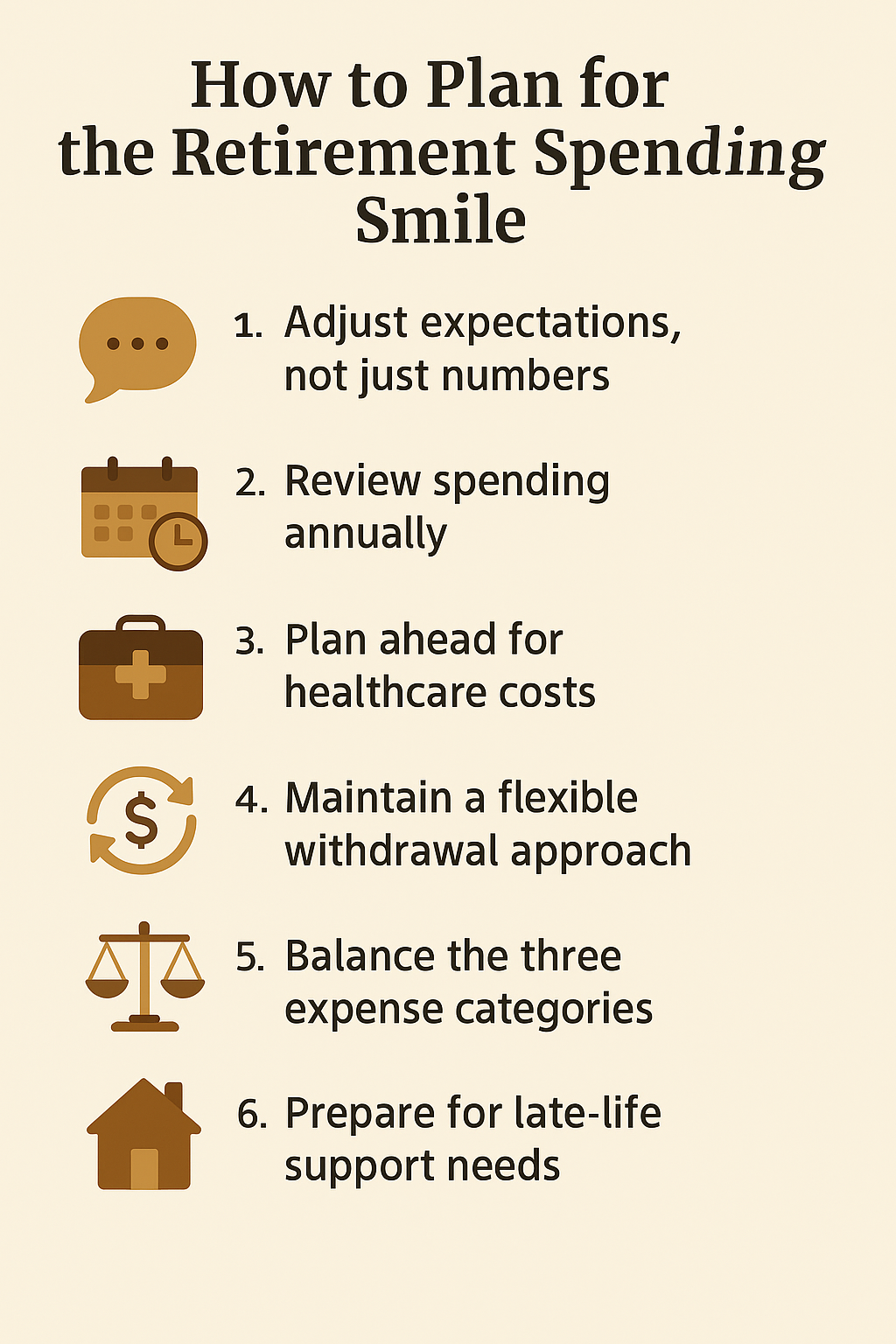
How to Plan for the Retirement Spending Smile
1. Adjust Expectations, Not Just Numbers
A successful retirement plan should fit how you actually live — not how a spreadsheet predicts you should live.
This means acknowledging that your spending will evolve over time.
2. Review Spending Annually
Costs can vary dramatically depending on your state or city — especially housing, insurance, and healthcare. An annual check-in keeps your plan aligned with your real-life needs.
Q: How often should retirees revisit their budget?
A: Many retirees review it once a year. This catches shifts early and prevents unpleasant surprises.
3. Plan Ahead for Healthcare Costs
Later-life expenses are often healthcare-related. You don’t need to predict everything — you just need to anticipate that costs may rise.
Ways to prepare include:
- Keeping an emergency fund
- Reviewing insurance coverage annually
- Understanding local healthcare costs
- Budgeting for future care needs
4. Maintain a Flexible Withdrawal Approach
Rigid withdrawal strategies don’t match the natural ebb and flow of spending.
Flexibility helps you to:
- Withdraw more when needed
- Withdraw less during quieter years
- Preserve savings for later retirement
- Reduce stress when markets fluctuate
5. Balance the Three Expense Categories
Just like earlier articles in this series, break spending into:
- Essentials — the must-haves
- Lifestyle — the nice-to-haves
- Future planning — potential future costs
The middle category changes significantly across the spending smile.
6. Prepare for Late-Life Support Needs
Some retirees choose to:
- Downsize
- Move closer to family
- Modify their home
- Research care options early
Planning ahead reduces emotional and financial stress later in life.
Q&A: Quick Answers About Retirement Spending
Q: Will inflation affect the spending smile?
A: Yes. Rising costs can shift the curve upward, especially for essentials like food, housing, and healthcare.
Q: Does location impact spending patterns?
A: Absolutely. Healthcare, taxes, insurance, and housing vary from state to state.
Q: What if my spending doesn’t match the smile?
A: That’s okay. The smile is a general pattern, not a rule. Your personal lifestyle and needs will shape your own curve.
 Tootsie’s Takeaway
A happy retirement is like a comfy nap — sometimes active, sometimes quiet, and eventually needing a little extra support. Plan ahead, and enjoy every stage.
Written by Brent Meyer, founder of SafeMoney.com. With more than 20 years of experience helping families navigate retirement and legacy planning, Brent is committed to making financial education simple, clear, and trustworthy.
Disclaimer: SafeMoney.com provides financial education only. For guidance on your specific situation, consult a licensed professional.
The post The Retirement Spending Smile Explained first appeared on SafeMoney.com.
Featured Blogs
- Estate Planning: More Than Just a Simple Will
- Safe Money vs Market Risk: Why Retirees Choose Protection
- Avoid Early Failures in Retirement Planning
- How Much Income Can $1 Million Really Generate?
- Can You Retire at 60 with $1 Million?
- Your Guide to Long-Term Care Planning
- Harnessing the Luck of the Irish for Your Retirement 🐾
- Honoring Women Advisors for National Women's Month
- Retiring During a Bear Market: What to Know
- The Biggest Retirement Tax Mistakes to Avoid
- Roth Conversions Before RMDs: Smart Tax Strategy?
- Mastering Roth IRA Conversions for Retirement Success
- Are You Paying Retirement Taxes You Don’t Have To?
- Annuities and the Peak65 Explosion
- Financial Trends of 2026: Advisors Play Critical Role
- Inflation Is Fueling Retirement Fears in 2026
- Social Security Survivor Benefits Explained for Couples
- Don't Let Unexpected Retirement Expenses Catch You Off Guard
- Annuities: Embracing the 'Safe Growth' Trend
- Will Social Security Run Out? 2026 Update
- Life Insurance: The Income Bridge Many Couples Miss
- What Happens to Your Income When One of You Is Gone?
- A Paws-On Approach to Understanding Medicare Basics 🐾
- Love Isn’t Just a Feeling—It’s a Retirement Plan
- Understanding Fixed Index Annuities in Today's Market
- Secure Retirement Plans: Annuities & Longevity Strategies
- New Tools, Same Goals: How Retirement Planning Is Evolving 🐾
- Why Market Volatility Hits Retirees Harder Than Workers
- Annuities: Your Forever Treat Bowl in Retirement 🐾
- The Retirement Paycheck: How to Replace Your Salary in Retirement
- Secure Your Retirement with Safe Income Strategies
- 3 Biggest Retirement Income Mistakes After 50
- Why Retirement Income Matters More Than Account Savings
- What Financial Awareness Really Means in Retirement
- Having Savings Isn’t the Same as Having a Plan
- The Secret to Retirement Confidence Is Structure, Not Luck
- What Retirees Should Review Before the New Year
- Preparing Your Retirement Income for the Year Ahead
- 🎾 Fetch Calm, Not Chaos: Keeping Retirement Income Steady
- Missed Medicare Open Enrollment? What Retirees Can Do Now
- Staying Calm in December Markets: A Bulldog’s Guide to Balance
- Why December Is Ideal for Securing Lifetime Income
- December Medicare Checkup: What to Review Before Jan 1
- 5 Year-End Retirement Blind Spots to Avoid in 2025
- Your December Retirement Checkup Guide
- Black Friday Savings Tips Retirees Can Use This Holiday
- The Retirement Spending Smile Explained
- A Thanksgiving Lesson in Gratitude, Guidance & Guaranteed Income
- Give Thanks, Then Revisit Your Retirement Plan
- How to Build Financial Resilience in Uncertain Times
- Smart Charitable Giving Before Year-End
- Understanding RMDs: What Every Retiree Needs to Know Before Age 73
- The Retirement Income Gap: Will Your Money Last?
- The Psychology of Retirement: Aligning Money and Mindset
- The 3-Bucket Plan for Calm Cash Flow
- How to Stress-Test Your Retirement Plan
- Why a Year-End Portfolio Review Could Save Your Retirement
- 4 Retirement Myths That Can Cost You Big Time
- Is Your Medicare Specialist on the Calendar Yet?
- The Retirement Tax Trap: Moves to Make Before Year-End
- How to Use Catch-Up Contributions to Boost Your Retirement
- Why Retirement Financial Literacy Matters More Than Ever
- Why Guaranteed Lifetime Income Is Your Next Big Priority
- Your Year-End Financial Planning Checklist for 2026
- The Hidden Link Between Health Costs and Retirement Security
- Tootsie Tuesday Starts Nov. 4—Stay Tuned!
- Keeping Your Financial Plan on Track After Retirement
- Medicare Open Enrollment Starts Today: What You Need to Know
- Protect What You’ve Built: Managing Risk in Retirement
- Turning Savings Into Income: Your Lifetime Paycheck Plan
- The Cost of Waiting: Don’t Delay Your Financial Plan
- How to Calculate Your Retirement Income Gap (Why It Matters)
- October Is National Financial Planning Awareness Month
- The Great Wealth Transfer: Baby Boomers Passing Trillions
- Permanent vs. Term Life Insurance: What’s the Difference?
- One Big Beautiful Bill: What Retirees Need to Know
- The Role of Life Insurance in a Comprehensive Retirement
- IUL Insurance Explained: Pros, Cons, and Misconceptions
- The Role of Life Insurance in Estate Planning
- Tax Advantages of Life Insurance You May Not Know
- Using Life Insurance to Protect Retirement Income
- Life Insurance vs. Annuities: Key Differences Explained
- How Much Life Insurance Do You Really Need?
- 5 Life Insurance Myths That Could Cost Your Family
- Life Insurance Awareness Month: Why It Matters in 2025
- What to Do After You’ve Made Your Will or Trust
- Passing Down More Than Money: Letters & Legacy Planning
- The Hidden Risks of DIY Wills and How to Avoid Them
- TOD, POD & Beneficiaries: Tools to Avoid Probate
- Probate Explained: What It Is and How to Avoid It
- Naming Beneficiaries: The Hidden Danger of Getting It Wrong
- Spotlight Series: Michael Dinich of Your Money Matters, Inc.
- Wills vs. Trusts: Do You Need One, the Other—or Both?
- What Really Happens If You Die Without a Will in Place?
- Why You Still Need a Will—Even If You’re Retired
- Quarles and Herring of Financial Longevity Advisory
- From Retirement Ready to Legacy Ready: What Comes Next?
- What’s Your Retirement Goal—and Are You on Track?
- How Inflation Quietly Erodes Your Retirement Income
- Peace of Mind in Retirement Starts With a Plan
- Avoiding Retirement Surprises Most People Miss
- How Social Security Timing Impacts Retirement Income
- Smart Tax Moves That Boost Retirement Income Longevity
- Spotlight Series Interview with Paul R. Lowe
- Avoiding Market Risks in Retirement: Why It Matters
- How to Create a Retirement Paycheck That Lasts
- How to Fill the Gaps in Your Retirement Income Plan
- Guardian Investment Advisors: Plan with Purpose
- Is Your Retirement Plan Ready for the Real World?
- A Holistic Retirement Strategy with Marlene Woodyard
- 3 Retirement Mistakes That Can Still Be Fixed in 2025
- The Power of Zero: Protecting Retirement from Losses
- What Happens If You Outlive Your Retirement Savings?