Missed Medicare Open Enrollment? What Retirees Can Do Now
Every year, Medicare Open Enrollment runs from October 15 through December 7, and every year, millions of retirees miss the deadline. Maybe life got busy, health issues came up, or you simply didn’t realize how quickly the window would close. Whatever the reason, if you’re reading this shortly after Open Enrollment ended—or already into the new year—you are not out of options.
The period immediately after Open Enrollment is one of the most important times for retirees to assess their coverage, identify potential gaps, and make a plan for the new plan year. Even though you can’t make the same changes you could during the fall enrollment window, you still have meaningful opportunities to improve your Medicare coverage, reduce out-of-pocket costs, and protect your retirement income.
Below, we break down exactly what retirees can do after missing Medicare Open Enrollment and how to move forward with clarity and confidence.
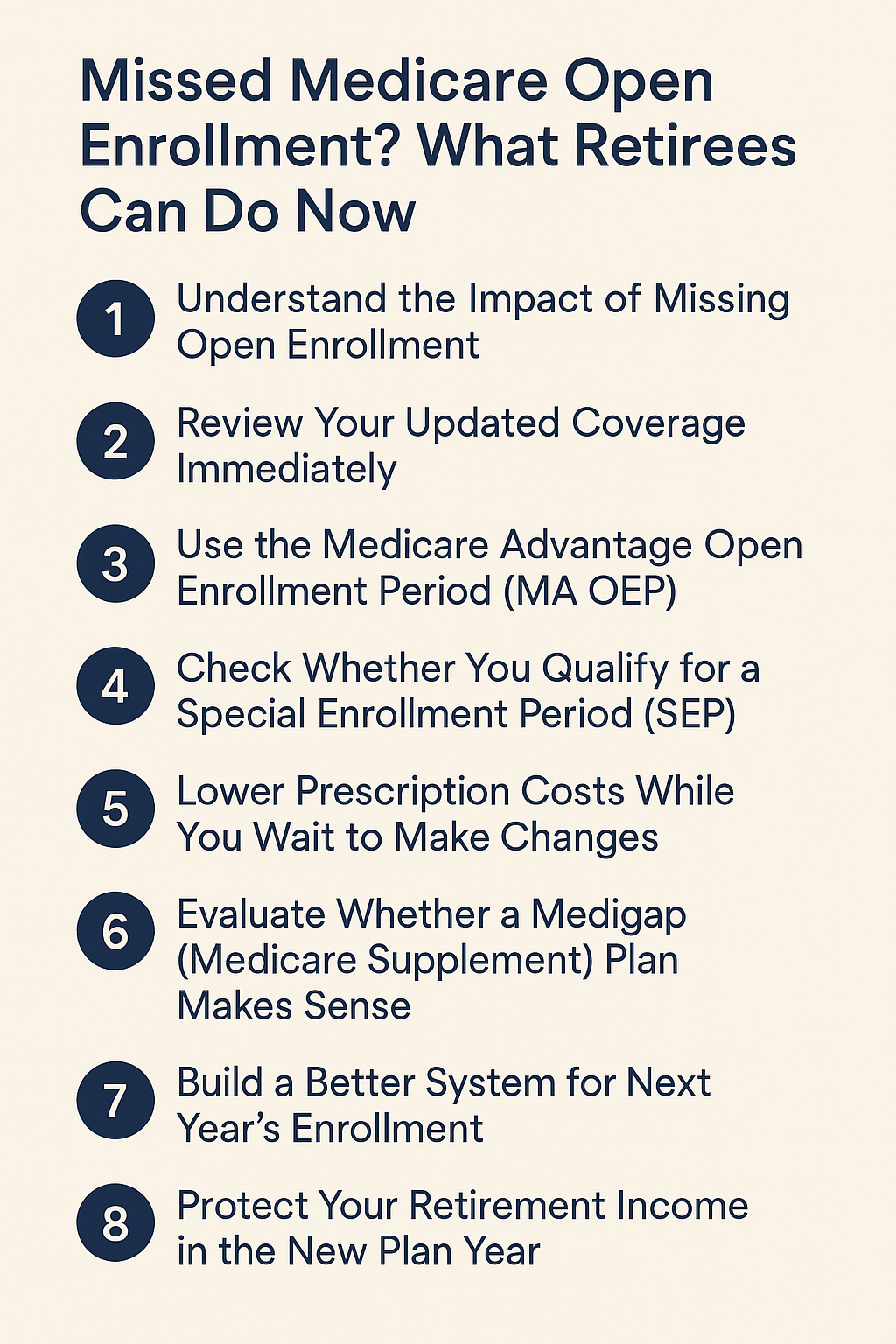
1. Understand the Impact of Missing Open Enrollment
When you miss Medicare Open Enrollment, your current Medicare Advantage or Part D prescription drug plan automatically renews with its updated premiums, deductibles, formularies, and provider networks.
This may mean:
- Higher monthly premiums
- Certain medications becoming more expensive or no longer covered
- Doctors leaving your plan’s network
- New copays or prior authorization rules
- More risk of unexpected medical bills
These updates take effect at the start of the new plan year, so reviewing your coverage as soon as possible helps prevent surprises and allows you to take action where options still exist.
Missing the window is common—and completely fixable—but it requires timely review and planning.
2. Review Your Updated Coverage Immediately
Your plan’s changes are already in place (or will be as soon as the new year begins). Now is the time to examine how your coverage will function so you can adjust your healthcare budget accordingly.
Review the following:
- Your Annual Notice of Change (ANOC)
- Updated premium costs
- Deductibles and copays
- Changes in your drug formulary
- Your plan’s preferred pharmacy list
- Any adjustments in doctor or hospital networks
- New out-of-pocket limits
Understanding these changes now provides a smoother experience through the new plan year and helps you avoid unnecessary costs that can chip away at retirement income.
3. Use the Medicare Advantage Open Enrollment Period (MA OEP)
If you are enrolled in Medicare Advantage, you automatically receive a second chance to adjust your coverage each year.
Medicare Advantage Open Enrollment
January 1 – March 31
During this period, you can:
- Switch to a different Medicare Advantage plan
- Drop Medicare Advantage and return to Original Medicare
- Add a Part D prescription drug plan (if returning to Original Medicare)
This is your best opportunity to correct coverage issues discovered after Open Enrollment closed.
MA OEP is especially valuable if:
- Your doctor is no longer in network
- Your prescription costs increased
- Your plan’s benefits changed unexpectedly
- You want more predictable costs or broader provider access
Important: You only get one plan change during MA OEP—so research your options carefully.
4. See If You Qualify for a Special Enrollment Period (SEP)
Some retirees can make changes outside the standard enrollment windows if they qualify for a Special Enrollment Period.
You may qualify for an SEP if:
- You moved outside your plan’s service area
- You lost employer or union group coverage
- Your plan ended its contract with Medicare
- You qualify for Medicaid
- You receive Extra Help for prescriptions
- You entered or left a skilled nursing facility
- You experienced an exceptional circumstance
If you qualify, you may be able to make Medicare changes immediately, even if Open Enrollment has ended and MA OEP hasn’t begun yet.
5. Lower Prescription Costs Even Before You Can Change Plans
Prescription drugs often produce the biggest financial shock after missing Open Enrollment. Even if you cannot change plans yet, there are ways to reduce costs:
- Ask your doctor about lower-cost alternatives
- Request 90-day supplies for chronic medications
- Use mail-order pharmacy options
- Compare pricing at different pharmacies
- Explore manufacturer discount programs
- Check your plan’s preferred pharmacy list
These adjustments help stabilize your spending until you can make more permanent changes during an enrollment period.
6. Evaluate Whether a Medigap (Medicare Supplement) Plan Makes Sense
If you’re on Original Medicare, you can apply for a Medigap plan any time of year. Even though underwriting may apply, Medigap can provide substantial protection against unexpected out-of-pocket costs.
Medigap may be beneficial if you want:
- More predictable annual healthcare expenses
- Reduced exposure to large hospital bills
- Flexibility in choosing doctors or specialists
- Long-term cost stability
Since Medigap enrollment isn’t tied to the fall Open Enrollment period, this is one area where retirees can still take action immediately.
7. Build a Better System for Next Year’s Enrollment
Missing Open Enrollment once is normal. Missing it again can create significant financial strain.
Start preparing now by:
- Setting reminders beginning in September
- Reading your Annual Notice of Change as soon as it arrives
- Tracking prescription changes during the year
- Keeping updated lists of preferred doctors and pharmacies
- Scheduling a Medicare review call earlier in the fall
The key is building a process that makes Open Enrollment easier and more manageable next time.
8. Protect Your Retirement Income Going Into the New Plan Year
Healthcare is one of the most unpredictable expenses in retirement. When Medicare plan changes aren’t reviewed, retirees may experience unexpected medical bills that disrupt cash flow.
Heading into the new year, consider:
- Reviewing your income strategy for predictability
- Adjusting your budget for expected medical costs
- Evaluating whether guaranteed income products can stabilize long-term planning
- Reassessing emergency savings
- Ensuring rising healthcare costs are reflected in your retirement projections
A Medicare decision is never just about healthcare—it’s a core part of long-term financial security.
Tootsie’s Takeaway 
Missed the Medicare deadline? No need to growl—just take a few smart steps now and you’ll walk into the new year with confidence (and more treats saved)!
Written by Brent Meyer, founder of SafeMoney.com. With more than 20 years of experience helping families navigate retirement and legacy planning, Brent is committed to making financial education simple, clear, and trustworthy.
Disclaimer: This article is for educational purposes only and does not provide tax, legal, or investment advice. Always consult a licensed professional regarding your personal situation.
The post Missed Medicare Open Enrollment? What Retirees Can Do Now first appeared on SafeMoney.com.
Featured Blogs
- Estate Planning: More Than Just a Simple Will
- Safe Money vs Market Risk: Why Retirees Choose Protection
- Avoid Early Failures in Retirement Planning
- How Much Income Can $1 Million Really Generate?
- Can You Retire at 60 with $1 Million?
- Your Guide to Long-Term Care Planning
- Harnessing the Luck of the Irish for Your Retirement 🐾
- Honoring Women Advisors for National Women's Month
- Retiring During a Bear Market: What to Know
- The Biggest Retirement Tax Mistakes to Avoid
- Roth Conversions Before RMDs: Smart Tax Strategy?
- Mastering Roth IRA Conversions for Retirement Success
- Are You Paying Retirement Taxes You Don’t Have To?
- Annuities and the Peak65 Explosion
- Financial Trends of 2026: Advisors Play Critical Role
- Inflation Is Fueling Retirement Fears in 2026
- Social Security Survivor Benefits Explained for Couples
- Don't Let Unexpected Retirement Expenses Catch You Off Guard
- Annuities: Embracing the 'Safe Growth' Trend
- Will Social Security Run Out? 2026 Update
- Life Insurance: The Income Bridge Many Couples Miss
- What Happens to Your Income When One of You Is Gone?
- A Paws-On Approach to Understanding Medicare Basics 🐾
- Love Isn’t Just a Feeling—It’s a Retirement Plan
- Understanding Fixed Index Annuities in Today's Market
- Secure Retirement Plans: Annuities & Longevity Strategies
- New Tools, Same Goals: How Retirement Planning Is Evolving 🐾
- Why Market Volatility Hits Retirees Harder Than Workers
- Annuities: Your Forever Treat Bowl in Retirement 🐾
- The Retirement Paycheck: How to Replace Your Salary in Retirement
- Secure Your Retirement with Safe Income Strategies
- 3 Biggest Retirement Income Mistakes After 50
- Why Retirement Income Matters More Than Account Savings
- What Financial Awareness Really Means in Retirement
- Having Savings Isn’t the Same as Having a Plan
- The Secret to Retirement Confidence Is Structure, Not Luck
- What Retirees Should Review Before the New Year
- Preparing Your Retirement Income for the Year Ahead
- 🎾 Fetch Calm, Not Chaos: Keeping Retirement Income Steady
- Missed Medicare Open Enrollment? What Retirees Can Do Now
- Staying Calm in December Markets: A Bulldog’s Guide to Balance
- Why December Is Ideal for Securing Lifetime Income
- December Medicare Checkup: What to Review Before Jan 1
- 5 Year-End Retirement Blind Spots to Avoid in 2025
- Your December Retirement Checkup Guide
- Black Friday Savings Tips Retirees Can Use This Holiday
- The Retirement Spending Smile Explained
- A Thanksgiving Lesson in Gratitude, Guidance & Guaranteed Income
- Give Thanks, Then Revisit Your Retirement Plan
- How to Build Financial Resilience in Uncertain Times
- Smart Charitable Giving Before Year-End
- Understanding RMDs: What Every Retiree Needs to Know Before Age 73
- The Retirement Income Gap: Will Your Money Last?
- The Psychology of Retirement: Aligning Money and Mindset
- The 3-Bucket Plan for Calm Cash Flow
- How to Stress-Test Your Retirement Plan
- Why a Year-End Portfolio Review Could Save Your Retirement
- 4 Retirement Myths That Can Cost You Big Time
- Is Your Medicare Specialist on the Calendar Yet?
- The Retirement Tax Trap: Moves to Make Before Year-End
- How to Use Catch-Up Contributions to Boost Your Retirement
- Why Retirement Financial Literacy Matters More Than Ever
- Why Guaranteed Lifetime Income Is Your Next Big Priority
- Your Year-End Financial Planning Checklist for 2026
- The Hidden Link Between Health Costs and Retirement Security
- Tootsie Tuesday Starts Nov. 4—Stay Tuned!
- Keeping Your Financial Plan on Track After Retirement
- Medicare Open Enrollment Starts Today: What You Need to Know
- Protect What You’ve Built: Managing Risk in Retirement
- Turning Savings Into Income: Your Lifetime Paycheck Plan
- The Cost of Waiting: Don’t Delay Your Financial Plan
- How to Calculate Your Retirement Income Gap (Why It Matters)
- October Is National Financial Planning Awareness Month
- The Great Wealth Transfer: Baby Boomers Passing Trillions
- Permanent vs. Term Life Insurance: What’s the Difference?
- One Big Beautiful Bill: What Retirees Need to Know
- The Role of Life Insurance in a Comprehensive Retirement
- IUL Insurance Explained: Pros, Cons, and Misconceptions
- The Role of Life Insurance in Estate Planning
- Tax Advantages of Life Insurance You May Not Know
- Using Life Insurance to Protect Retirement Income
- Life Insurance vs. Annuities: Key Differences Explained
- How Much Life Insurance Do You Really Need?
- 5 Life Insurance Myths That Could Cost Your Family
- Life Insurance Awareness Month: Why It Matters in 2025
- What to Do After You’ve Made Your Will or Trust
- Passing Down More Than Money: Letters & Legacy Planning
- The Hidden Risks of DIY Wills and How to Avoid Them
- TOD, POD & Beneficiaries: Tools to Avoid Probate
- Probate Explained: What It Is and How to Avoid It
- Naming Beneficiaries: The Hidden Danger of Getting It Wrong
- Spotlight Series: Michael Dinich of Your Money Matters, Inc.
- Wills vs. Trusts: Do You Need One, the Other—or Both?
- What Really Happens If You Die Without a Will in Place?
- Why You Still Need a Will—Even If You’re Retired
- Quarles and Herring of Financial Longevity Advisory
- From Retirement Ready to Legacy Ready: What Comes Next?
- What’s Your Retirement Goal—and Are You on Track?
- How Inflation Quietly Erodes Your Retirement Income
- Peace of Mind in Retirement Starts With a Plan
- Avoiding Retirement Surprises Most People Miss
- How Social Security Timing Impacts Retirement Income
- Smart Tax Moves That Boost Retirement Income Longevity
- Spotlight Series Interview with Paul R. Lowe
- Avoiding Market Risks in Retirement: Why It Matters
- How to Create a Retirement Paycheck That Lasts
- How to Fill the Gaps in Your Retirement Income Plan
- Guardian Investment Advisors: Plan with Purpose
- Is Your Retirement Plan Ready for the Real World?
- A Holistic Retirement Strategy with Marlene Woodyard
- 3 Retirement Mistakes That Can Still Be Fixed in 2025
- The Power of Zero: Protecting Retirement from Losses
- What Happens If You Outlive Your Retirement Savings?