5 Year-End Retirement Blind Spots to Avoid in 2025
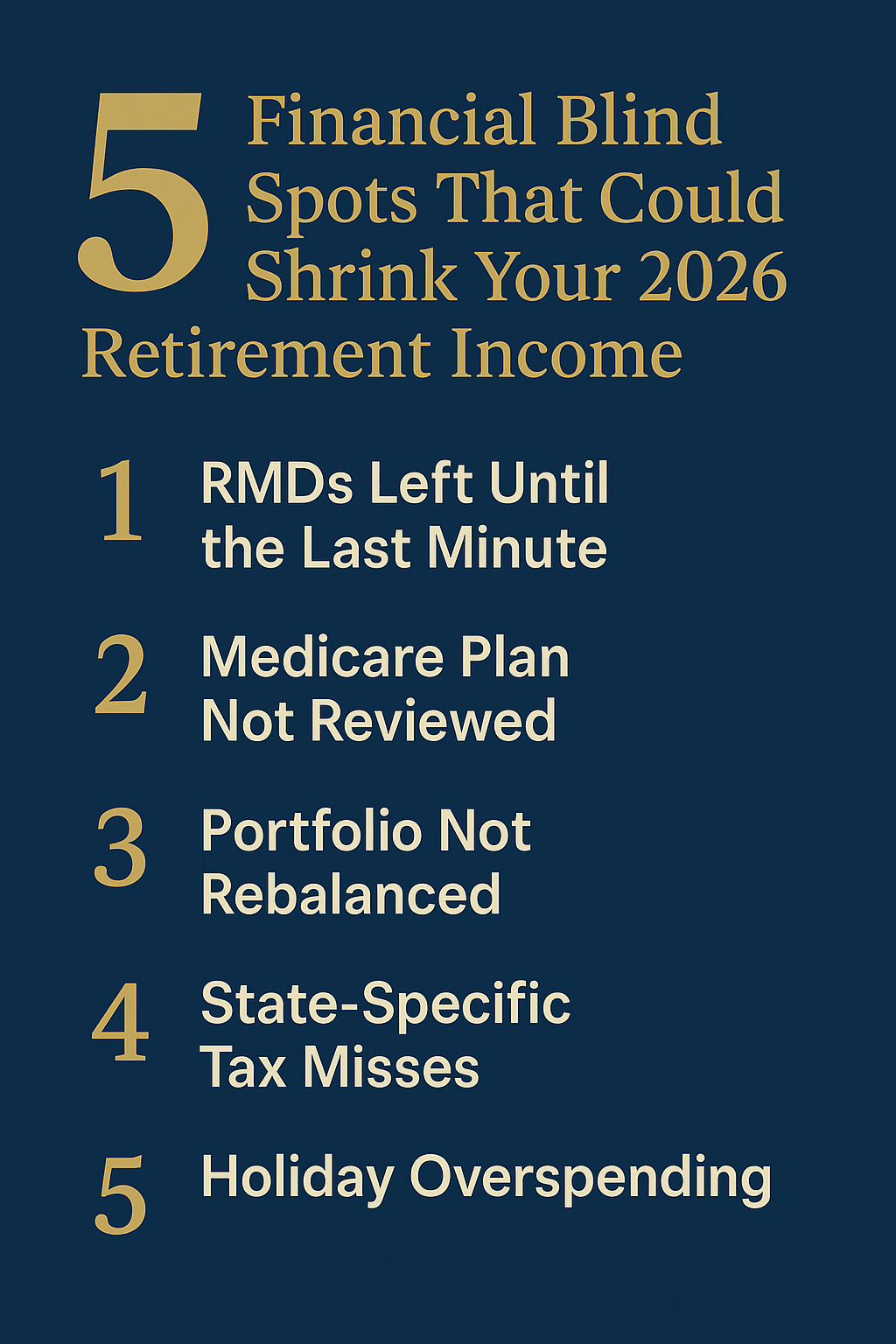
Year-End Retirement Planning: The 5 Financial Blind Spots That Could Shrink Your Retirement Income in 2026
As 2025 winds down, many retirees and pre-retirees shift their focus to holiday plans, travel, and family time — but year-end is also one of the most critical windows for protecting future retirement income. The decisions you make in the last few weeks of the year can either strengthen your financial foundation… or quietly chip away at the income you’ll rely on in 2026 and beyond.
This article breaks down the five most common financial blind spots retirees face in December, why they often go unnoticed, and how to correct them now before they turn into real income shortages later.
If you live in states like Florida, Texas, Georgia, Arizona, Pennsylvania, or New Jersey — where taxes, insurance costs, and retirement landscapes vary widely — these blind spots are even more important to understand. Proper planning today creates peace of mind tomorrow, no matter where you retire.
1. Ignoring Required Minimum Distributions (RMDs) Until the Last Minute
Even seasoned retirees can underestimate the impact of RMD timing. The IRS doesn’t give much grace — missing your RMD can trigger steep penalties and unexpected taxable income, which is why it’s so important to understand your retirement income planning.
Why this is a blind spot
Many retirees assume their custodian will handle everything for them. But institutions aren’t responsible for ensuring you meet IRS deadlines.
Risks of ignoring RMD timing
- You may move into a higher tax bracket.
- Medicare costs (IRMAA) can increase in 2026.
- Your Social Security benefits may become more taxable.
- Penalties for failure to take an RMD can be up to 25% of the amount not withdrawn.
Corrective action
- Review all tax-deferred accounts (traditional IRAs, 401(k)s, SEP IRAs).
- Confirm your balance-based RMD calculation.
- Consider staggering withdrawals earlier in the year for 2026 to reduce year-end pressure.
You can also explore guaranteed income products that reduce RMD stress through structured distributions — a strategy many Safe Money advisors use to simplify tax-efficient withdrawals.
2. Not Reviewing Medicare Coverage Before the Close of Open Enrollment
This is a December epidemic: retirees stick with the same Medicare plan year after year, even as their prescriptions, doctor networks, or coverage tiers change.
Why this is a blind spot
Most retirees assume “what worked last year will work next year,” but insurers regularly adjust co-pays, deductibles, drug tiers, and out-of-network rules.
Why it matters for 2026 income
A poor Medicare plan doesn’t just raise healthcare costs — it reduces disposable cash flow for daily living and retirement enjoyment.
A difference of:
- $40/month on drug costs
- $75/month on co-pays
- $600/year in deductible increases
…adds up to thousands lost over the course of a year.
Corrective action
- Compare your current plan with updated 2026 options.
- Double-check your preferred doctors and prescriptions.
- Review supplemental coverage if you live in high-medical-cost states like Florida or New Jersey.
Healthcare is one of the biggest retirement expenses — ignoring it is ignoring part of your income.
3. Failing to Rebalance Investments After a Volatile Year
2025 has brought a mixed market, depending on the sector. Many retirees don’t realize that their portfolio may now be overweight in risk — especially if stocks outperformed their income-based holdings.
Why this is a blind spot
Rebalancing doesn’t feel urgent. Nothing triggers fear, and nothing seems “wrong,” so it gets pushed off.
But a portfolio left unchecked can drift far from your risk tolerance.
Income impact for 2026
- A poorly timed market dip in early 2026 could reduce your income potential.
- Drawing from volatile investments increases sequence-of-returns risk.
- You may be forced to withdraw from assets that dropped in value — permanently locking in losses.
Corrective action
- Rebalance before year-end using a risk-first framework.
- Shift into stable, guaranteed products if income protection is your priority.
- Run a portfolio stress test (most advisors can do this in minutes).
This is where protection-first planning shines: your future income shouldn’t depend on whether the market is having a good week.
4. Overlooking State-Specific Tax Opportunities or Penalties
Year-end tax rules are not one-size-fits-all — especially for retirees in states with shifting tax environments.
Examples of state-specific blind spots
- Florida: No state income tax, but property insurance and rising premiums can eat into income if not budgeted.
- Texas: High property taxes impact retirees on fixed incomes.
- New Jersey & Pennsylvania: Different rules for pension income and annuity taxation.
- Arizona & Georgia: Varying deductions and tax benefits depending on age and income levels.
How this impacts 2026 income
Missing tax opportunities now can mean:
- Paying more in April
- Lower spendable income throughout the year
- Reduced ability to maintain emergency savings
Corrective action
- Review tax-loss harvesting opportunities.
- Confirm whether Roth conversions benefit you this year or next.
- Check if your state offers senior-specific deductions or credits.
- Consult with an advisor who understands localized retirement tax planning.
5. Holiday Overspending — The Silent Retirement Income Killer
A December financial article wouldn’t be complete without addressing the elephant in the room: holiday spending.
Why this is a blind spot
Most retirees have flexible days but fixed income. So when travel, gifts, events, and charitable contributions spike, the extra expenses don’t simply “reset” in January.
How holiday overspending disrupts 2026 income
- It reduces cash reserves needed for early-year expenses.
- Unexpected credit card balances create interest costs.
- Savings meant for emergencies may be used for holiday purchases.
- Withdrawals increase — triggering higher taxes and potentially higher Medicare brackets next year.
Corrective action
- Give yourself a firm holiday budget tied to your fixed income.
- Use “cash envelopes” or separate debit cards for gifting.
- Avoid tapping into retirement accounts unless it’s part of a strategic withdrawal plan.
- Rebuild your emergency fund by April 2026.
This is the one blind spot retirees know is coming — but still tend to underestimate.
Final Thoughts: Year-End Is When Retirement Income Is Protected or Lost
Financial success in retirement has less to do with dramatic investment wins and more to do with avoiding preventable losses. December is the best month to tighten the gaps, strengthen your protection plan, and make sure every dollar is working toward your long-term income security.
If you want guidance on tax-efficient withdrawals, guaranteed income planning, or building a protection-first retirement strategy, a Safe Money advisor can walk you through your options.
 Tootsie’s Takeaway
Small money leaks add up fast — trust me, I guard my snacks the same way retirees should guard their income.
Written by Brent Meyer, founder of SafeMoney.com. With more than 20 years of experience helping families navigate retirement and legacy planning, Brent is committed to making financial education simple, clear, and trustworthy.
Disclaimer: This article is for educational purposes only and should not be taken as financial, tax, or legal advice. Consult with a licensed professional before making decisions that affect your retirement income.
The post 5 Year-End Retirement Blind Spots to Avoid in 2025 first appeared on SafeMoney.com.
Featured Blogs
- Estate Planning: More Than Just a Simple Will
- Safe Money vs Market Risk: Why Retirees Choose Protection
- Avoid Early Failures in Retirement Planning
- How Much Income Can $1 Million Really Generate?
- Can You Retire at 60 with $1 Million?
- Your Guide to Long-Term Care Planning
- Harnessing the Luck of the Irish for Your Retirement 🐾
- Honoring Women Advisors for National Women's Month
- Retiring During a Bear Market: What to Know
- The Biggest Retirement Tax Mistakes to Avoid
- Roth Conversions Before RMDs: Smart Tax Strategy?
- Mastering Roth IRA Conversions for Retirement Success
- Are You Paying Retirement Taxes You Don’t Have To?
- Annuities and the Peak65 Explosion
- Financial Trends of 2026: Advisors Play Critical Role
- Inflation Is Fueling Retirement Fears in 2026
- Social Security Survivor Benefits Explained for Couples
- Don't Let Unexpected Retirement Expenses Catch You Off Guard
- Annuities: Embracing the 'Safe Growth' Trend
- Will Social Security Run Out? 2026 Update
- Life Insurance: The Income Bridge Many Couples Miss
- What Happens to Your Income When One of You Is Gone?
- A Paws-On Approach to Understanding Medicare Basics 🐾
- Love Isn’t Just a Feeling—It’s a Retirement Plan
- Understanding Fixed Index Annuities in Today's Market
- Secure Retirement Plans: Annuities & Longevity Strategies
- New Tools, Same Goals: How Retirement Planning Is Evolving 🐾
- Why Market Volatility Hits Retirees Harder Than Workers
- Annuities: Your Forever Treat Bowl in Retirement 🐾
- The Retirement Paycheck: How to Replace Your Salary in Retirement
- Secure Your Retirement with Safe Income Strategies
- 3 Biggest Retirement Income Mistakes After 50
- Why Retirement Income Matters More Than Account Savings
- What Financial Awareness Really Means in Retirement
- Having Savings Isn’t the Same as Having a Plan
- The Secret to Retirement Confidence Is Structure, Not Luck
- What Retirees Should Review Before the New Year
- Preparing Your Retirement Income for the Year Ahead
- 🎾 Fetch Calm, Not Chaos: Keeping Retirement Income Steady
- Missed Medicare Open Enrollment? What Retirees Can Do Now
- Staying Calm in December Markets: A Bulldog’s Guide to Balance
- Why December Is Ideal for Securing Lifetime Income
- December Medicare Checkup: What to Review Before Jan 1
- 5 Year-End Retirement Blind Spots to Avoid in 2025
- Your December Retirement Checkup Guide
- Black Friday Savings Tips Retirees Can Use This Holiday
- The Retirement Spending Smile Explained
- A Thanksgiving Lesson in Gratitude, Guidance & Guaranteed Income
- Give Thanks, Then Revisit Your Retirement Plan
- How to Build Financial Resilience in Uncertain Times
- Smart Charitable Giving Before Year-End
- Understanding RMDs: What Every Retiree Needs to Know Before Age 73
- The Retirement Income Gap: Will Your Money Last?
- The Psychology of Retirement: Aligning Money and Mindset
- The 3-Bucket Plan for Calm Cash Flow
- How to Stress-Test Your Retirement Plan
- Why a Year-End Portfolio Review Could Save Your Retirement
- 4 Retirement Myths That Can Cost You Big Time
- Is Your Medicare Specialist on the Calendar Yet?
- The Retirement Tax Trap: Moves to Make Before Year-End
- How to Use Catch-Up Contributions to Boost Your Retirement
- Why Retirement Financial Literacy Matters More Than Ever
- Why Guaranteed Lifetime Income Is Your Next Big Priority
- Your Year-End Financial Planning Checklist for 2026
- The Hidden Link Between Health Costs and Retirement Security
- Tootsie Tuesday Starts Nov. 4—Stay Tuned!
- Keeping Your Financial Plan on Track After Retirement
- Medicare Open Enrollment Starts Today: What You Need to Know
- Protect What You’ve Built: Managing Risk in Retirement
- Turning Savings Into Income: Your Lifetime Paycheck Plan
- The Cost of Waiting: Don’t Delay Your Financial Plan
- How to Calculate Your Retirement Income Gap (Why It Matters)
- October Is National Financial Planning Awareness Month
- The Great Wealth Transfer: Baby Boomers Passing Trillions
- Permanent vs. Term Life Insurance: What’s the Difference?
- One Big Beautiful Bill: What Retirees Need to Know
- The Role of Life Insurance in a Comprehensive Retirement
- IUL Insurance Explained: Pros, Cons, and Misconceptions
- The Role of Life Insurance in Estate Planning
- Tax Advantages of Life Insurance You May Not Know
- Using Life Insurance to Protect Retirement Income
- Life Insurance vs. Annuities: Key Differences Explained
- How Much Life Insurance Do You Really Need?
- 5 Life Insurance Myths That Could Cost Your Family
- Life Insurance Awareness Month: Why It Matters in 2025
- What to Do After You’ve Made Your Will or Trust
- Passing Down More Than Money: Letters & Legacy Planning
- The Hidden Risks of DIY Wills and How to Avoid Them
- TOD, POD & Beneficiaries: Tools to Avoid Probate
- Probate Explained: What It Is and How to Avoid It
- Naming Beneficiaries: The Hidden Danger of Getting It Wrong
- Spotlight Series: Michael Dinich of Your Money Matters, Inc.
- Wills vs. Trusts: Do You Need One, the Other—or Both?
- What Really Happens If You Die Without a Will in Place?
- Why You Still Need a Will—Even If You’re Retired
- Quarles and Herring of Financial Longevity Advisory
- From Retirement Ready to Legacy Ready: What Comes Next?
- What’s Your Retirement Goal—and Are You on Track?
- How Inflation Quietly Erodes Your Retirement Income
- Peace of Mind in Retirement Starts With a Plan
- Avoiding Retirement Surprises Most People Miss
- How Social Security Timing Impacts Retirement Income
- Smart Tax Moves That Boost Retirement Income Longevity
- Spotlight Series Interview with Paul R. Lowe
- Avoiding Market Risks in Retirement: Why It Matters
- How to Create a Retirement Paycheck That Lasts
- How to Fill the Gaps in Your Retirement Income Plan
- Guardian Investment Advisors: Plan with Purpose
- Is Your Retirement Plan Ready for the Real World?
- A Holistic Retirement Strategy with Marlene Woodyard
- 3 Retirement Mistakes That Can Still Be Fixed in 2025
- The Power of Zero: Protecting Retirement from Losses
- What Happens If You Outlive Your Retirement Savings?