How to Use Catch-Up Contributions to Boost Your Retirement
Why Catch-Up Contributions Matter More Than Ever
If you’re age 50 or older, the ability to make catch-up contributions can provide a powerful boost to your retirement savings and income strategy. With longer lifespans, rising costs, and new rules in effect, those extra contributions can make a significant difference.
In fact, for 2025 and beyond, retirees and near-retirees face not only the challenge of accumulating enough, but also converting that into reliable income. Industry insights show the shift toward income planning, lifetime income solutions, and smart use of tax-advantaged tools.
Understanding Catch-Up Contributions
Catch-up contributions allow workers age 50+ (and in some cases older) to contribute above the standard limits to retirement accounts such as 401(k)s and IRAs. This gives you a chance to accelerate savings as you approach retirement.
For example:
- In 2025, the 401(k) catch-up limit for those age 50+ stood at an additional $7,500 for many plans.
- Not all plans are identical—some employers may offer even higher limits or different rules depending on age and income.
These extra dollars not only increase your savings but can help create a stronger foundation when converting savings to income.
How Catch-Up Contributions Help Your Income Strategy
1. Adds More Principal for Lifetime Income
By contributing more now, you grow the base you’ll need when converting savings into income (annuitizing, creating a personal pension, etc.). This strengthens your “income floor” and reduces risk of outliving your money.
2. Benefits From Tax Advantages
Catch-up dollars are often pre-tax (for 401(k)s) or may qualify for tax credits. This lowers your taxable income now—or if using a Roth catch-up (depending on plan rules), creates more tax-free income later.
3. Helps Offset Rising Costs & Inflation
Because lifetime income strategies depend on the size of your savings and timing, every extra dollar you contribute increases how much monthly income you can build later—helping keep pace with inflation, healthcare costs, and longevity.
4. Leverages Legislation & Workplace Trends
As industry research notes, plan sponsors and advisers are increasingly focusing on retirement income and broadening choices for plan participants. Catch-up contributions align with this shift, allowing you to take advantage of these enhanced options.
Who Qualifies & What to Check
- You must typically be age 50 or older by year end to make catch-up contributions for that year.
- Verify with your employer’s plan or your IRA provider for specific limits, eligibilities, and deadlines.
- In 2026, rules may shift further (especially given evolving legislation and industry trends). Stay informed.
- Check whether your plan offers Roth catch-up options (after-tax) or only traditional pre-tax. The choice affects your future tax and income flexibility.
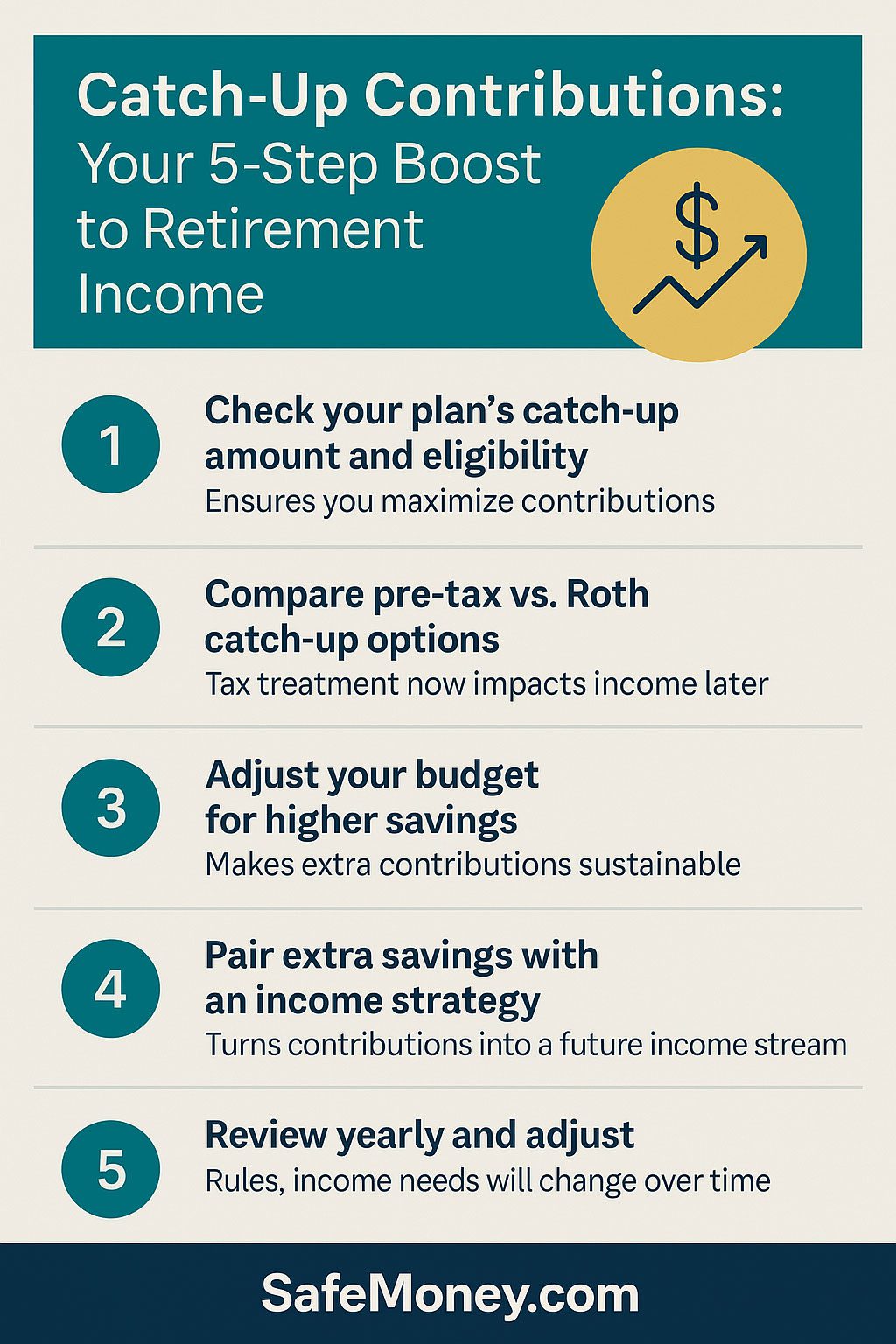
Step-by-Step: How to Maximize Your Catch-Up Strategy
| Step | What to Do | Why It’s Important |
|---|---|---|
| 1 | Check your plan’s specific catch-up amount and eligibility. | Ensures you know exactly how much extra you can contribute. |
| 2 | Compare pre-tax vs Roth catch-up options. | Tax treatment now affects income later. |
| 3 | Adjust your budget and cash flow to accommodate higher savings. | Makes the extra contribution sustainable. |
| 4 | Pair extra savings with an income strategy. | Converts contributions into a future income stream, not just savings. |
| 5 | Review yearly and adjust. | Rules, income needs, and markets evolve — review keeps your plan current. |
Common Mistakes to Avoid
- Skipping catch-up because “I’m too busy” – Every extra dollar counts, especially when converting to lifetime income.
- Using catch-up as “extra spending money” – The goal is to strengthen your retirement income floor, not just boost savings.
- Ignoring tax treatment of contributions – Whether you choose pre-tax or Roth affects future income, tax liability, and flexibility.
- Not linking contributions to income planning – Dumping savings into accounts without planning how you’ll use them later can leave gaps.
Final Thoughts
If you’re age 50 or older, catch-up contributions are one of the most under-utilized yet high-impact tools available to strengthen your retirement income plan. They not only boost your savings but help you build a foundation for guaranteed lifetime income, reduce tax risk, and protect against the unknowns of retirement.
Take action now: check your plan limit, decide pre-tax vs Roth, adjust your budget, and integrate the extra savings into your broader income strategy.
Because when you’re adding not just dollars—but security, confidence, and future income—you’re not simply saving for retirement—you’re planning for a lifetime.
Written by Brent Meyer, founder of SafeMoney.com. With more than 20 years of experience helping families navigate retirement and legacy planning, Brent is committed to making financial education simple, clear, and trustworthy.
Sources: Alight Solutions • Charles Schwab • J.P. Morgan Asset Management • Internal Revenue Service (IRS) • U.S. Department of Labor • Fidelity Investments
Disclaimer: This article is for informational and educational purposes only and should not be construed as financial, tax, or legal advice. Consult a licensed professional about your specific retirement savings and income strategy.
The post How to Use Catch-Up Contributions to Boost Your Retirement first appeared on SafeMoney.com.
Featured Blogs
- Estate Planning: More Than Just a Simple Will
- Safe Money vs Market Risk: Why Retirees Choose Protection
- Avoid Early Failures in Retirement Planning
- How Much Income Can $1 Million Really Generate?
- Can You Retire at 60 with $1 Million?
- Your Guide to Long-Term Care Planning
- Harnessing the Luck of the Irish for Your Retirement 🐾
- Honoring Women Advisors for National Women's Month
- Retiring During a Bear Market: What to Know
- The Biggest Retirement Tax Mistakes to Avoid
- Roth Conversions Before RMDs: Smart Tax Strategy?
- Mastering Roth IRA Conversions for Retirement Success
- Are You Paying Retirement Taxes You Don’t Have To?
- Annuities and the Peak65 Explosion
- Financial Trends of 2026: Advisors Play Critical Role
- Inflation Is Fueling Retirement Fears in 2026
- Social Security Survivor Benefits Explained for Couples
- Don't Let Unexpected Retirement Expenses Catch You Off Guard
- Annuities: Embracing the 'Safe Growth' Trend
- Will Social Security Run Out? 2026 Update
- Life Insurance: The Income Bridge Many Couples Miss
- What Happens to Your Income When One of You Is Gone?
- A Paws-On Approach to Understanding Medicare Basics 🐾
- Love Isn’t Just a Feeling—It’s a Retirement Plan
- Understanding Fixed Index Annuities in Today's Market
- Secure Retirement Plans: Annuities & Longevity Strategies
- New Tools, Same Goals: How Retirement Planning Is Evolving 🐾
- Why Market Volatility Hits Retirees Harder Than Workers
- Annuities: Your Forever Treat Bowl in Retirement 🐾
- The Retirement Paycheck: How to Replace Your Salary in Retirement
- Secure Your Retirement with Safe Income Strategies
- 3 Biggest Retirement Income Mistakes After 50
- Why Retirement Income Matters More Than Account Savings
- What Financial Awareness Really Means in Retirement
- Having Savings Isn’t the Same as Having a Plan
- The Secret to Retirement Confidence Is Structure, Not Luck
- What Retirees Should Review Before the New Year
- Preparing Your Retirement Income for the Year Ahead
- 🎾 Fetch Calm, Not Chaos: Keeping Retirement Income Steady
- Missed Medicare Open Enrollment? What Retirees Can Do Now
- Staying Calm in December Markets: A Bulldog’s Guide to Balance
- Why December Is Ideal for Securing Lifetime Income
- December Medicare Checkup: What to Review Before Jan 1
- 5 Year-End Retirement Blind Spots to Avoid in 2025
- Your December Retirement Checkup Guide
- Black Friday Savings Tips Retirees Can Use This Holiday
- The Retirement Spending Smile Explained
- A Thanksgiving Lesson in Gratitude, Guidance & Guaranteed Income
- Give Thanks, Then Revisit Your Retirement Plan
- How to Build Financial Resilience in Uncertain Times
- Smart Charitable Giving Before Year-End
- Understanding RMDs: What Every Retiree Needs to Know Before Age 73
- The Retirement Income Gap: Will Your Money Last?
- The Psychology of Retirement: Aligning Money and Mindset
- The 3-Bucket Plan for Calm Cash Flow
- How to Stress-Test Your Retirement Plan
- Why a Year-End Portfolio Review Could Save Your Retirement
- 4 Retirement Myths That Can Cost You Big Time
- Is Your Medicare Specialist on the Calendar Yet?
- The Retirement Tax Trap: Moves to Make Before Year-End
- How to Use Catch-Up Contributions to Boost Your Retirement
- Why Retirement Financial Literacy Matters More Than Ever
- Why Guaranteed Lifetime Income Is Your Next Big Priority
- Your Year-End Financial Planning Checklist for 2026
- The Hidden Link Between Health Costs and Retirement Security
- Tootsie Tuesday Starts Nov. 4—Stay Tuned!
- Keeping Your Financial Plan on Track After Retirement
- Medicare Open Enrollment Starts Today: What You Need to Know
- Protect What You’ve Built: Managing Risk in Retirement
- Turning Savings Into Income: Your Lifetime Paycheck Plan
- The Cost of Waiting: Don’t Delay Your Financial Plan
- How to Calculate Your Retirement Income Gap (Why It Matters)
- October Is National Financial Planning Awareness Month
- The Great Wealth Transfer: Baby Boomers Passing Trillions
- Permanent vs. Term Life Insurance: What’s the Difference?
- One Big Beautiful Bill: What Retirees Need to Know
- The Role of Life Insurance in a Comprehensive Retirement
- IUL Insurance Explained: Pros, Cons, and Misconceptions
- The Role of Life Insurance in Estate Planning
- Tax Advantages of Life Insurance You May Not Know
- Using Life Insurance to Protect Retirement Income
- Life Insurance vs. Annuities: Key Differences Explained
- How Much Life Insurance Do You Really Need?
- 5 Life Insurance Myths That Could Cost Your Family
- Life Insurance Awareness Month: Why It Matters in 2025
- What to Do After You’ve Made Your Will or Trust
- Passing Down More Than Money: Letters & Legacy Planning
- The Hidden Risks of DIY Wills and How to Avoid Them
- TOD, POD & Beneficiaries: Tools to Avoid Probate
- Probate Explained: What It Is and How to Avoid It
- Naming Beneficiaries: The Hidden Danger of Getting It Wrong
- Spotlight Series: Michael Dinich of Your Money Matters, Inc.
- Wills vs. Trusts: Do You Need One, the Other—or Both?
- What Really Happens If You Die Without a Will in Place?
- Why You Still Need a Will—Even If You’re Retired
- Quarles and Herring of Financial Longevity Advisory
- From Retirement Ready to Legacy Ready: What Comes Next?
- What’s Your Retirement Goal—and Are You on Track?
- How Inflation Quietly Erodes Your Retirement Income
- Peace of Mind in Retirement Starts With a Plan
- Avoiding Retirement Surprises Most People Miss
- How Social Security Timing Impacts Retirement Income
- Smart Tax Moves That Boost Retirement Income Longevity
- Spotlight Series Interview with Paul R. Lowe
- Avoiding Market Risks in Retirement: Why It Matters
- How to Create a Retirement Paycheck That Lasts
- How to Fill the Gaps in Your Retirement Income Plan
- Guardian Investment Advisors: Plan with Purpose
- Is Your Retirement Plan Ready for the Real World?
- A Holistic Retirement Strategy with Marlene Woodyard
- 3 Retirement Mistakes That Can Still Be Fixed in 2025
- The Power of Zero: Protecting Retirement from Losses
- What Happens If You Outlive Your Retirement Savings?