The Retirement Income Gap: Will Your Money Last?
The Retirement Income Gap: How to Know If You’ll Run Out of Money
One of the biggest fears people share about retirement isn’t market volatility… taxes… or inflation.
It’s four simple words:
“What if I outlive my money?”
That fear is real — and deserved. Americans are living longer than ever, everyday expenses continue rising, and traditional pensions have disappeared for many retirees. If you rely on savings, Social Security, and investment withdrawals alone, you may face what experts call the retirement income gap.
Your retirement income gap is the difference between:
 What you need
What you want
— and —
What your retirement income actually provides
Understanding this gap early — and closing it — is one of the smartest financial moves you can make before or during retirement. Let’s break down how to calculate it, why it grows over time, and what you can do to secure lifelong income.
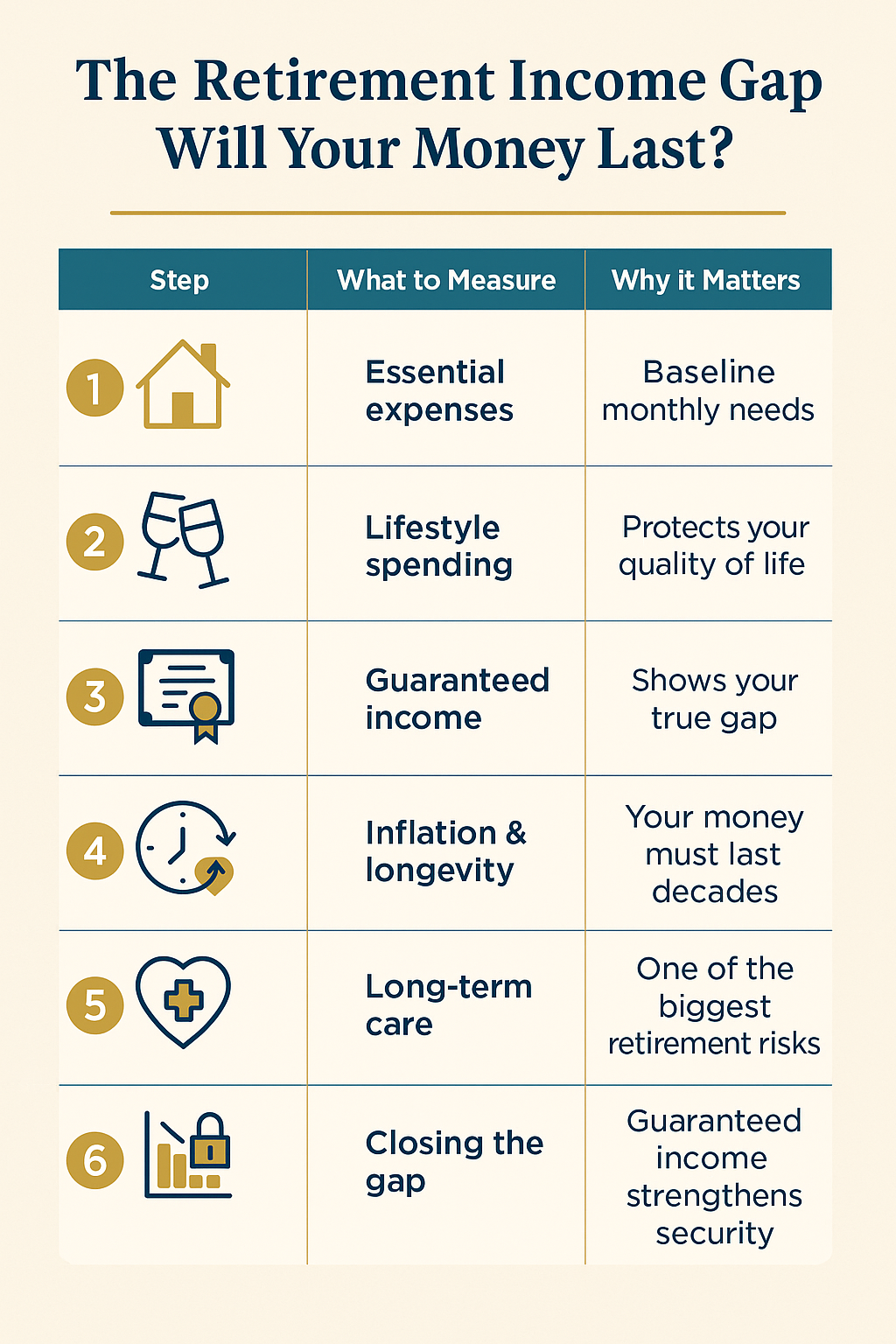
1. Start With Your Essential Expenses
Your income gap isn’t about luxuries or travel (yet).
It starts with your non-negotiable expenses, including:
- Housing (mortgage, taxes, insurance, maintenance)
- Utilities
- Food
- Healthcare & prescriptions
- Medicare premiums
- Transportation
- Insurance
- Taxes
These are the bills you’ll pay no matter what the market does.
Your first step: Write down what those essentials cost today — per month and per year.
Then ask:
“If all I had was Social Security, could I cover these without touching savings?”
For most Americans, the answer is no — and the gap is bigger than expected.
2. Add Your Lifestyle Costs
Retirement shouldn’t feel like a downgrade. Your lifestyle goals matter, too:
- Eating out
- Travel
- Hobbies
- Grandchildren
- Home projects
- Gifts
- Fitness or club memberships
This spending is what makes retirement enjoyable. If you ignore it, your gap calculation will be misleading — and you may underestimate how much income you really need.
3. Compare It to Your Guaranteed Income
Guaranteed income is money you can rely on every month — no matter what the market does:
- Social Security
- Pensions
- Lifetime annuities
- Certain income riders
- Rental income (if consistent)
Add these together.
If your guaranteed income is less than your essential + lifestyle expenses…
you officially have a retirement income gap.
Most retirees do.
But the good news? There are smart ways to close it.
4. Why the Gap Widens Over Time
Even if your income covers your needs today, the gap may widen in the future. Here’s why:
A. Inflation
At just 3% inflation:
- Prices double every 24 years
- A $5,000 monthly need becomes $10,000
Healthcare inflates even faster — sometimes 5–7% annually.
B. Market Volatility
If you withdraw from investments during a downturn, you lock in losses. This reduces future growth and shrinks how long your money lasts.
This is known as sequence-of-returns risk — and it’s one of retirement’s silent threats.
C. Longevity
Living longer is a blessing — but it requires income that lasts longer, too.
A healthy 65-year-old today may live another 25–30 years. That’s a long time for your money to stretch.
D. Healthcare & Long-Term Care Costs
Long-term care is one of the biggest risks to your retirement plan.
- Home health aide: $60,000+ per year
- Assisted living: $55,000+
- Nursing home: $100,000–$130,000+
These expenses alone can create a massive income gap if not planned for.
5. How to Close Your Retirement Income Gap
The key to closing the gap is creating steady, predictable income that supports your lifestyle — without relying entirely on investments.
Here are proven ways retirees strengthen their income strategy:
1. Turn a Portion of Savings Into Guaranteed Income
Many retirees convert part of their nest egg into lifetime income, creating their own “personal pension.”
This helps:
- Cover essential expenses
- Reduce stress
- Remove guesswork
- Protect against market downturns
- Prevent outliving savings
2. Create a Smart Withdrawal Strategy
Instead of withdrawing randomly from accounts, use a coordinated approach:
- Withdraw from taxable accounts first
- Delay tapping IRAs for tax-efficiency
- Consider bridging Social Security
- Use Roth withdrawals strategically
- Protect assets during market dips
A good withdrawal sequence can extend your retirement savings by years.
3. Review Your Investment Mix
Your portfolio must balance:
- Growth (to keep up with inflation)
- Safety (to prevent losses during withdrawals)
- Income (to fill your gap)
Retirees often benefit from reducing risk, smoothing volatility, and adding predictable income sources that rise or remain stable.
4. Plan for Long-Term Care
Long-term care is a leading cause of large retirement income gaps.
Options include:
- LTC insurance
- Hybrid life + LTC policies
- Annuities with care multipliers
- Home modification funds
- Savings earmarked for care
- Family/shared care plans
Planning early reduces future financial strain.
5. Strengthen Tax Efficiency
Taxes impact how far your money goes.
Optimizing withdrawals, Roth conversions, and income timing can increase your spendable income — without increasing risk.
6. The Single Most Important Question
After you evaluate your gap, ask yourself:
“Is my income guaranteed for as long as I live?”
If the answer is no, then your retirement is vulnerable to:
- Longer life
- Market downturns
- Inflation
- Rising healthcare costs
- Unexpected expenses
The goal isn’t to eliminate every risk — it’s to create a plan that adapts, protects, and lasts.
The Bottom Line
The retirement income gap isn’t something to fear — it’s something to measure and address.
The earlier you identify it, the easier it is to close.
When your monthly expenses are backed by stable, predictable income, you gain what every retiree wants:
Security. Flexibility. Peace of mind. Confidence in the future.
And that’s the foundation of a happy, stress-free retirement.
 Tootsie’s Takeaway
“Don’t guess whether your money will last — know it! A quick check today keeps tail-wagging confidence for years to come.”
Written by Brent Meyer, founder of SafeMoney.com. With more than 20 years of experience helping families navigate retirement and legacy planning, Brent is committed to making financial education simple, clear, and trustworthy.
Disclaimer: SafeMoney.com provides financial education only. For guidance on your specific situation, consult a licensed professional.
The post The Retirement Income Gap: Will Your Money Last? first appeared on SafeMoney.com.
Featured Blogs
- Estate Planning: More Than Just a Simple Will
- Safe Money vs Market Risk: Why Retirees Choose Protection
- Avoid Early Failures in Retirement Planning
- How Much Income Can $1 Million Really Generate?
- Can You Retire at 60 with $1 Million?
- Your Guide to Long-Term Care Planning
- Harnessing the Luck of the Irish for Your Retirement 🐾
- Honoring Women Advisors for National Women's Month
- Retiring During a Bear Market: What to Know
- The Biggest Retirement Tax Mistakes to Avoid
- Roth Conversions Before RMDs: Smart Tax Strategy?
- Mastering Roth IRA Conversions for Retirement Success
- Are You Paying Retirement Taxes You Don’t Have To?
- Annuities and the Peak65 Explosion
- Financial Trends of 2026: Advisors Play Critical Role
- Inflation Is Fueling Retirement Fears in 2026
- Social Security Survivor Benefits Explained for Couples
- Don't Let Unexpected Retirement Expenses Catch You Off Guard
- Annuities: Embracing the 'Safe Growth' Trend
- Will Social Security Run Out? 2026 Update
- Life Insurance: The Income Bridge Many Couples Miss
- What Happens to Your Income When One of You Is Gone?
- A Paws-On Approach to Understanding Medicare Basics 🐾
- Love Isn’t Just a Feeling—It’s a Retirement Plan
- Understanding Fixed Index Annuities in Today's Market
- Secure Retirement Plans: Annuities & Longevity Strategies
- New Tools, Same Goals: How Retirement Planning Is Evolving 🐾
- Why Market Volatility Hits Retirees Harder Than Workers
- Annuities: Your Forever Treat Bowl in Retirement 🐾
- The Retirement Paycheck: How to Replace Your Salary in Retirement
- Secure Your Retirement with Safe Income Strategies
- 3 Biggest Retirement Income Mistakes After 50
- Why Retirement Income Matters More Than Account Savings
- What Financial Awareness Really Means in Retirement
- Having Savings Isn’t the Same as Having a Plan
- The Secret to Retirement Confidence Is Structure, Not Luck
- What Retirees Should Review Before the New Year
- Preparing Your Retirement Income for the Year Ahead
- 🎾 Fetch Calm, Not Chaos: Keeping Retirement Income Steady
- Missed Medicare Open Enrollment? What Retirees Can Do Now
- Staying Calm in December Markets: A Bulldog’s Guide to Balance
- Why December Is Ideal for Securing Lifetime Income
- December Medicare Checkup: What to Review Before Jan 1
- 5 Year-End Retirement Blind Spots to Avoid in 2025
- Your December Retirement Checkup Guide
- Black Friday Savings Tips Retirees Can Use This Holiday
- The Retirement Spending Smile Explained
- A Thanksgiving Lesson in Gratitude, Guidance & Guaranteed Income
- Give Thanks, Then Revisit Your Retirement Plan
- How to Build Financial Resilience in Uncertain Times
- Smart Charitable Giving Before Year-End
- Understanding RMDs: What Every Retiree Needs to Know Before Age 73
- The Retirement Income Gap: Will Your Money Last?
- The Psychology of Retirement: Aligning Money and Mindset
- The 3-Bucket Plan for Calm Cash Flow
- How to Stress-Test Your Retirement Plan
- Why a Year-End Portfolio Review Could Save Your Retirement
- 4 Retirement Myths That Can Cost You Big Time
- Is Your Medicare Specialist on the Calendar Yet?
- The Retirement Tax Trap: Moves to Make Before Year-End
- How to Use Catch-Up Contributions to Boost Your Retirement
- Why Retirement Financial Literacy Matters More Than Ever
- Why Guaranteed Lifetime Income Is Your Next Big Priority
- Your Year-End Financial Planning Checklist for 2026
- The Hidden Link Between Health Costs and Retirement Security
- Tootsie Tuesday Starts Nov. 4—Stay Tuned!
- Keeping Your Financial Plan on Track After Retirement
- Medicare Open Enrollment Starts Today: What You Need to Know
- Protect What You’ve Built: Managing Risk in Retirement
- Turning Savings Into Income: Your Lifetime Paycheck Plan
- The Cost of Waiting: Don’t Delay Your Financial Plan
- How to Calculate Your Retirement Income Gap (Why It Matters)
- October Is National Financial Planning Awareness Month
- The Great Wealth Transfer: Baby Boomers Passing Trillions
- Permanent vs. Term Life Insurance: What’s the Difference?
- One Big Beautiful Bill: What Retirees Need to Know
- The Role of Life Insurance in a Comprehensive Retirement
- IUL Insurance Explained: Pros, Cons, and Misconceptions
- The Role of Life Insurance in Estate Planning
- Tax Advantages of Life Insurance You May Not Know
- Using Life Insurance to Protect Retirement Income
- Life Insurance vs. Annuities: Key Differences Explained
- How Much Life Insurance Do You Really Need?
- 5 Life Insurance Myths That Could Cost Your Family
- Life Insurance Awareness Month: Why It Matters in 2025
- What to Do After You’ve Made Your Will or Trust
- Passing Down More Than Money: Letters & Legacy Planning
- The Hidden Risks of DIY Wills and How to Avoid Them
- TOD, POD & Beneficiaries: Tools to Avoid Probate
- Probate Explained: What It Is and How to Avoid It
- Naming Beneficiaries: The Hidden Danger of Getting It Wrong
- Spotlight Series: Michael Dinich of Your Money Matters, Inc.
- Wills vs. Trusts: Do You Need One, the Other—or Both?
- What Really Happens If You Die Without a Will in Place?
- Why You Still Need a Will—Even If You’re Retired
- Quarles and Herring of Financial Longevity Advisory
- From Retirement Ready to Legacy Ready: What Comes Next?
- What’s Your Retirement Goal—and Are You on Track?
- How Inflation Quietly Erodes Your Retirement Income
- Peace of Mind in Retirement Starts With a Plan
- Avoiding Retirement Surprises Most People Miss
- How Social Security Timing Impacts Retirement Income
- Smart Tax Moves That Boost Retirement Income Longevity
- Spotlight Series Interview with Paul R. Lowe
- Avoiding Market Risks in Retirement: Why It Matters
- How to Create a Retirement Paycheck That Lasts
- How to Fill the Gaps in Your Retirement Income Plan
- Guardian Investment Advisors: Plan with Purpose
- Is Your Retirement Plan Ready for the Real World?
- A Holistic Retirement Strategy with Marlene Woodyard
- 3 Retirement Mistakes That Can Still Be Fixed in 2025
- The Power of Zero: Protecting Retirement from Losses
- What Happens If You Outlive Your Retirement Savings?